
Somebody Once Told Me...
What Jung and Shrek Teach Us About Living a Life of Joy
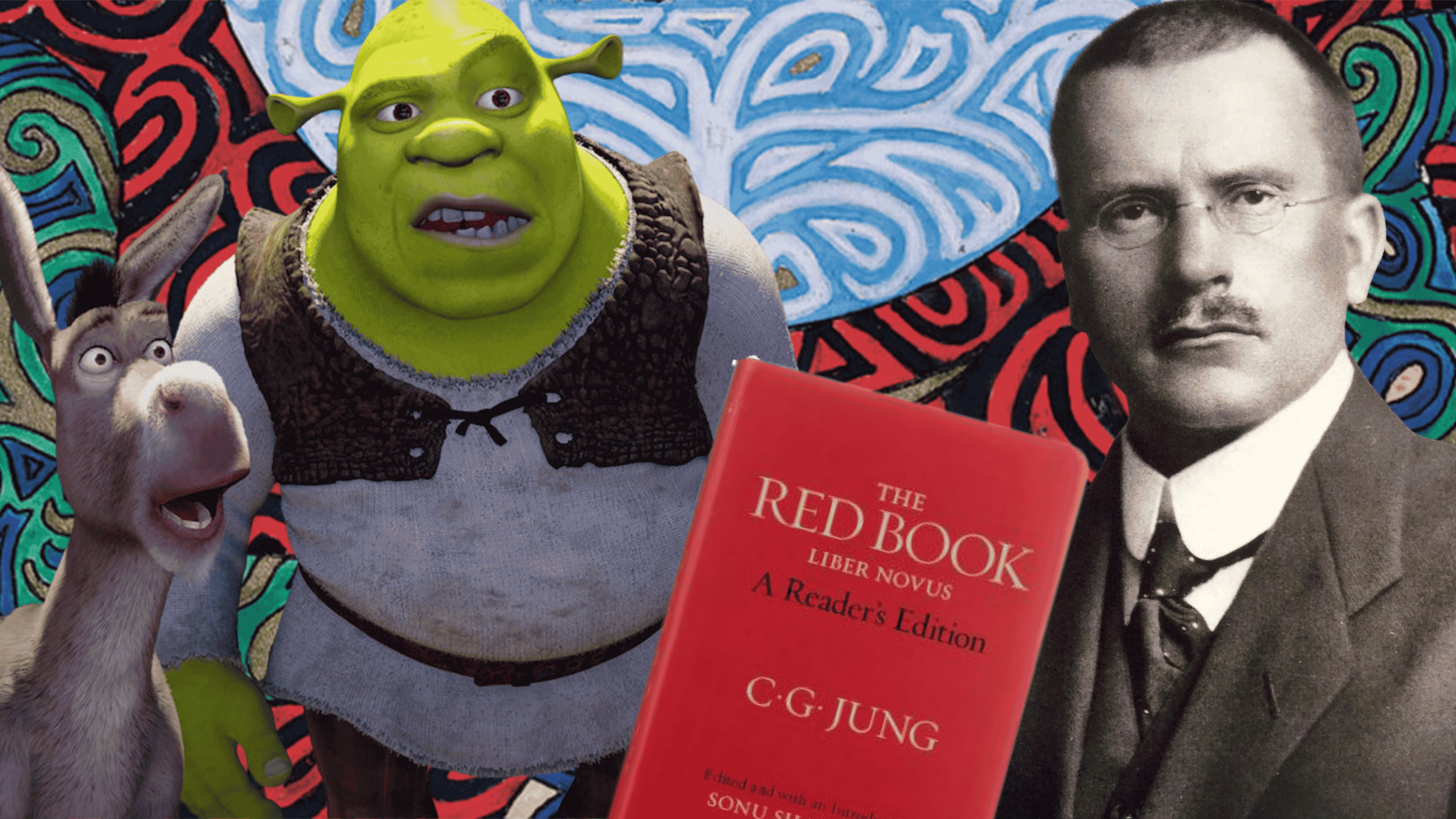
I've been thinking a lot about joy lately - what actually brings joy versus what just passes the time. It started with a line from Jung's Red Book that really captured me, and it turned into a whole rabbit hole of writing (more on that below). It also happened to land right as I've been finalizing groups for August. A lot of what I've written about this month is exactly why I run groups - to question what’s not working and to discover how we get back to ourselves.
Joy Seekers and Reclaim the Flame are both starting this August, meeting around 9/10am DC time (so around 2/3pm London, 9/10pm in Tokyo). A few spots remain in each.
In Jung’s Red Book (kept in a vault until 48 years after his death and only fully released in English in 2009), he writes a simple but radical piece of advice about living a full life:
“If no outer adventure happens to you, then no inner adventure happens to you either. The part that you take over from the devil - joy, that is - leads you into adventure.” (p.263)
There’s a reason Jung is considered a founder of Depth Psychology. This is deep stuff, but let’s wade in. I think most of us can agree with this first part about outer adventure, especially as Foreign Service people or expats. We know what it's like to move countries, learn new customs, butcher another language at the grocery store, and slowly realize we've become a different person because of it. Travel stretches us. It introduces us to different ways of living and, hopefully, leaves us with more compassion, more curiosity, and a little less certainty that our own way is the only way. If you don't leave your comfort zone you don't grow as a person.
Now let's get into this devil bit. Jung talks about taking joys back from the devil. He didn’t really mean the Christian Devil. My own reading is that the "devil" represents whatever alienates us from ourselves. It is the force that keeps us small, disconnected, or asleep. Sometimes that's an internal force like shame, perfectionism, or fear. Sometimes it's cultural. It might be hustle culture convincing us our worth depends on our productivity. It might be capitalism insisting every hobby should become a side hustle. It might be patriarchy teaching us that certain parts of ourselves are acceptable while others should be hidden away.
If you're into tarot, the devil card often represents the ways we dissociate (substances/technology) or other ideas that we are chained down by (unhealthy “beauty” ideals or consumerist culture). This card often shows a man and a woman chained to the floor and to each other or sometimes on puppet strings being controlled by the devil. Again, this devil is not technically the devil of Christianity it is the “evil” or unhelpful ways that live within each of us and within the world. More so, it’s about what has bound us. What are our highest Selves limited by? What lies have become our truths? Yes, I know the giant horned devil doesn't exactly scream "subtle metaphor." Stay with me.
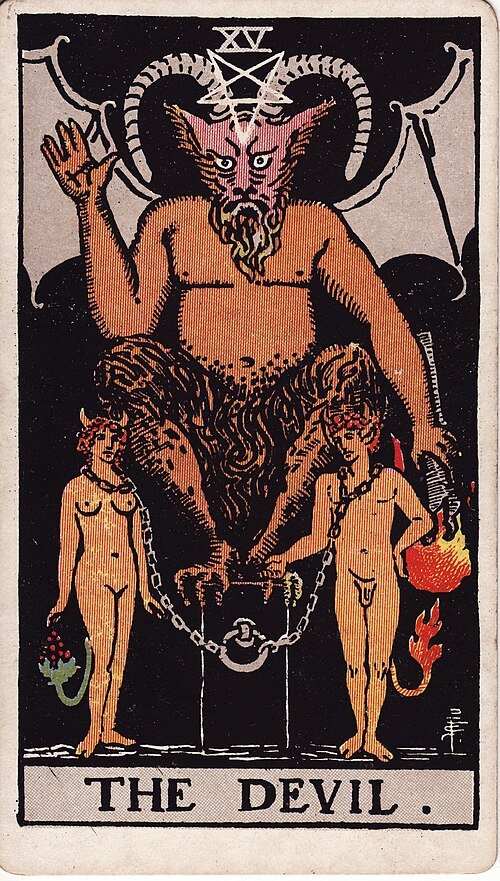
What’s interesting is that the Devil itself doesn’t have much power. The devil is only as strong as the grip any vice has on us. Each vice keeps us from joy and Jung challenges us to take it back. Jung specifically named joy as important. I don't think he's talking about happiness in the everyday sense, or about chasing pleasure wherever we can find it. Pleasure is wonderful, but it isn't always a reliable guide. Doomscrolling or falling down an instagram/tik tok hole can be pleasurable. Buying things can feel good. Joy is different. Joy has an unmistakable feeling of aliveness. Joy usually asks something of us. It asks us to show up, to participate, to risk looking foolish, to be present. There's a reason people leave a pottery class, a dance lesson, or a backpacking trip feeling more energized than when they arrived, even though all of those things require effort. In queer circles the phrase “Joy is resistance” is common. There's a beautiful quote from Dan Savage that I often return to:
“During the darkest days of the AIDS crisis, we buried our friends in the morning, we protested in the afternoon, and we danced all night. The dance kept us in the fight because it was the dance we were fighting for.”
I love this because it flips our usual understanding of joy. We tend to think of joy as something we earn after the hard work is finished. Dan Savage reminds us that joy is often the thing that makes the hard work possible. Joy is power. Joy is connected to our aliveness. Aliveness is worth fighting for. When we're disconnected from that aliveness, we often don't notice at first. We stop painting. We stop dancing in the grocery store. We stop wandering museums. We stop calling the friends who make us laugh until we cry. Then, months or years later, we finally return to one of those things and think, “This is awesome, why did I ever stop doing this?” Whatever got in your way, that’s the “devil”.
That's why I think joy is one of the most psychologically useful emotions we have. It isn't simply a reward for living well. It's information. It tells us where our life wants to grow. IJoy is one of the best clues we have about who we're becoming. We spend so much of our lives asking, What should I do? What's the right decision? What's my purpose? But maybe another useful question is: What makes me come alive? What makes me grow as a human/family member/friend? Growth leads us to adventures. Many of these adventures don’t require passports. It's a journey to tell a hard truth to a friend or partner or to finally allow yourself to make some art (even if you just throw it away after) or to rest instead of being “productive”.
When my clients are feeling really lost, I don’t tell them to journal or take a spa day. I ask them to become detectives of their own aliveness. I ask them to notice what sparks curiosity, wonder, delight, or genuine engagement. Sometimes that's creating something. Sometimes it's hiking. Sometimes it's dancing terribly in your kitchen. Sometimes it's noticing a tiny flower growing through the sidewalk on your walk to work. Go somewhere you've never been. Learn something. Make something. Play. Really play. Dance. Climb a tree. Commit fully to a ridiculous game of tag. Wander through an art museum with absolutely no agenda. Notice what pulls on you.
We've been taught to value what is productive over what is meaningful, what is impressive over what is nourishing, what looks successful over what actually makes us feel alive. We become so busy proving our worth that we forget to ask whether we're actually living. Oppression abounds when people are too tired to have fun. Too spent to refill their cups. Too dissociated to dream. This is why I think Jung saw joy as such an important guide. Not because following your joy guarantees permanent happiness, in fact, Jung had such an intense midlife crisis- his wife, Emma Jung (who became a skilled analyst in her own right), didn’t think he would survive it. Joy is valuable because it helps you find and expand your edges. It leads you into experiences you couldn't have planned. Joy introduces you to new people, new ideas, and eventually to parts of yourself you didn't know were there. Joy doesn't just make life more enjoyable. It expands the edges of who you are. Here’s the next few lines from Jung:
“In this way you will find your lower as well as your upper limits. It is necessary for you to know your limits. If you do not know them, you run into the artificial barriers of your imagination and the expectations of your fellow men.”
So joy leads us to adventure, which leads us to our limits. If you're not truly tuning into what your upper limits are, if you are not pushing to reach your highest levels of joy you will often set your limits too low. Most of us assume we already know our limits. We spend so much of our lives assuming we already know our limits. We say, I'm not artistic. I'm not athletic. I'm not leadership material. I'm not brave enough. But how many of those limits have we actually tested? How many of them belong to us, and how many were quietly inherited from our families, our professions, or our culture?
That's why I think joy matters so much. Joy has a way of pulling us beyond those imagined limits. Joy helps us fight fear - fear of rejection, of being alone, of scarcity, of not being “good enough” (whatever that means). It nudges us toward the pottery class, the solo trip, the new relationship, the career change, the community choir, or whatever strange little thing has been tugging at us for years. We don't always know why we're drawn to it, but something in us is trying to lead us to a beautiful life.
Joseph Campbell’s greatest piece of advice was to “follow your bliss”. He felt bliss was how one could discern and live out their fullest life and highest calling. Bliss isn’t easy, it often involves enduring the judgement of others as you carve out your own unique path. But as Pedro Pascal in a giant spacesuit says, “this is the way.” Campbell and Jung are backed up by the eternal wisdom of Smashmouth:
“You’ll never know if you don’t go. You'll never shine if you don't glow”
As a tiny aside, I think Jung and Campbell would say Shrek is really crushing it. He lives the life he wants without worrying about the judgment of others and when something he cares about (his swamp) is in danger he steps out of his comfort zone to go fight for it. And you know, if you have seen this theatrical masterpiece, along his journey he falls into gifts of love and friendship.
“But your life will not take kindly to being hemmed in by artificial barriers. Life wants to jump over such barriers and you will fall out with yourself. Therefore try to find your real limits. One never knows them in advance, but one sees and understands them only when one reaches them.”
Often, we're too fearful to really hit our limits to really touch that rock bottom. But it is important to fail, it's important to find you can travel no further in India, to stand freezing and soaking wet in a deserted shack during an intense rainstorm in Madeira, to have your job offer rescinded after asking for a higher salary because they think you are unmanageable - just a few examples of how I found some my limits. These moments were intensely painful, but also clarifying.
The same is true when you don't get the promotion, when the gallery rejects your paintings, when the band asks you to leave, or when someone you deeply love decides they can't choose you. None of those experiences are evidence that you've failed. They're evidence that you've ventured far enough to discover something real. Every time we find a genuine limit, we become a little less trapped by imaginary ones.
You may set your limits in conventional ways - the job, the salary, the waist size, the ivy league university. There are some people who really feel fulfilled with conventional success. I will warn you, that group of people is smaller than you think and it’s probably not you if you are reading this. You cannot hide your highest potential from your Soul. She will be unhappy with you if you settle and you will cause yourself unnecessary pain and likely you will not understand what's going on because all of this is happening in your unconscious mind. You will be fighting with yourself, which is a confusing process which often involves limiting self-thoughts and self-sabotage. That's what I think Jung means when he says life won't tolerate artificial barriers. Life has a funny way of pushing against the stories we've accepted about ourselves. Sometimes joy leads us there gently. Sometimes failure drags us there kicking and screaming. Either way, we're invited to become more honest about who we are.
Jung’s next piece of advice is about balance.
“And [finding one’s limits] happens only if you have balance. Without balance you transgress your limits without noticing what has happened to you. You achieve balance, however, only if you nurture your opposite. But that is hateful to you and your innermost core because it is not heroic.”
Wasn’t Jung just telling us to go find our limits through pursuing joy? This next part is the more human part of the quest - the warning and the map. If all we heard was "follow your joy," it would be easy to think Jung was encouraging us to quit our jobs, buy a one-way ticket to Thailand, and become “citizens of the world". I don't think that's what he means at all. Joy tells us where to go. Balance tells us when to stop.
There's a difference between stretching yourself and abandoning yourself. I've definitely confused the two. There were moments while I was traveling when I kept pushing simply because I thought that's what a "real traveler" would do. I ignored the fact that I was exhausted because somewhere along the way I'd decided it was more important to stick to the schedule, not waste money on pre-booked tickets, and see more things rather than to rest, reflect, and integrate. Looking back, I wasn't following joy anymore. I was following an identity.
The same thing happened in Madeira almost 10 years later (the journey never ends - for better or worse). I found myself shivering in a tiny shelter while big fat stinging rain came down sideways (Forest Gump was also from Alabama as you may recall), watching the roads disappear beneath sheets of water, trying to convince myself I could still make it down the mountain on my motorbike. It had been a dark few days for me and I decided I would see the most beautiful sunrise in Madeira. My healing was hinged on this physical journey, and my demise could also have been. If I had been more in balance, I would have respected the elements, turned around when the rain started, and healed in my warm, cozy bed. But at least once I transgressed my limit, at least I stopped pushing and just waited.
Balance isn't about playing it safe sometimes. It's about staying connected enough to yourself that you know when you've reached a real limit instead of pushing through it because you're trying to prove something. So Jung is telling us balance comes through nurturing our opposite, and that we’re going to hate it because we’ve decided our way is the right way. But what if it isn't?
As someone who prides myself on being independent, I don't want the lesson to be asking for help. If I see myself as productive, I don't want the answer to be rest. If I've built an identity around being adventurous, I certainly don't want the lesson to be staying put for a few days in a quiet courtyard in India because my body has had enough or missing the sunrise that will “heal me” because I couldn’t “tough it out”.
Growth is not actually about doing or achieving more. For do-ers and achievers, growth is about doing less. Resting in our inherent worth and sometimes just actually getting more sleep or letting your body rest on your bed for 10 minutes rather than putting the dishes away or sending that one last email.
"What I formerly loved I must now experience as feeble and wasted, and what I formerly derided I had to envy as towering and helplessly crave."
For anyone who has done work on their depths, in therapy or at a rock bottom, you have experienced this. The parts of ourselves we judge most harshly often have something to teach us. The person who rolls their eyes at people who rest may secretly be desperate for permission to stop. The person who calls someone "too much" may ache to take up more space. The one who prides themselves on never needing anyone else may be starving for intimacy.
Jung would probably call these disowned parts of ourselves the shadow. Whatever language we use, they have a remarkable way of following us until we're willing to listen. Hopefully, my comments about the “devil” before are more clear. The devil is the illusion of our limits set by societal/social/familial expectations. There is a link in our chain for every story we've accepted about who we're allowed to be without exploring how true it is.
After nearly 3,000 words, let’s wrap this up. I don't think Jung is telling us to chase happiness. I think he's inviting us to become more fully ourselves. Joy points us toward the experiences that make us feel most alive. Adventure tests us. Failure humbles us. Balance keeps us from abandoning ourselves along the way. And over time, if we're paying attention, we start to see the wisdom of the parts of ourselves we've spent years trying to outrun.
Thankfully, this isn't a journey we're meant to take alone. Shrek thought he was better off alone, but in the end he really needed several people (not even just friends and lovers) to finish his quest. One of the reasons I love group therapy so much is that it gives us a place to test our edges with people who have no existing stories about us. We get to discover where we're hiding, where we're performing, where we're stuck, and where we're ready to grow, all while being witnessed by people doing the same courageous work. Sometimes the greatest adventure isn't moving to yet another country. Sometimes it's telling the truth in a room full of strangers and discovering you don't have to carry it alone anymore.
If this essay resonated with you, and you're curious about what your own joy, limits, and neglected opposites might be trying to teach you, I'd love to have you join one of my groups. This is exactly the kind of work we do together. We’re starting a few in August. Right now the timing looks like it will be around East Coast mornings, EU/Africa afternoons, and Asia evenings. But the groups are built based on participant’s availability - so add in your free times on the forms and I’ll do my best to accommodate you this time or next.
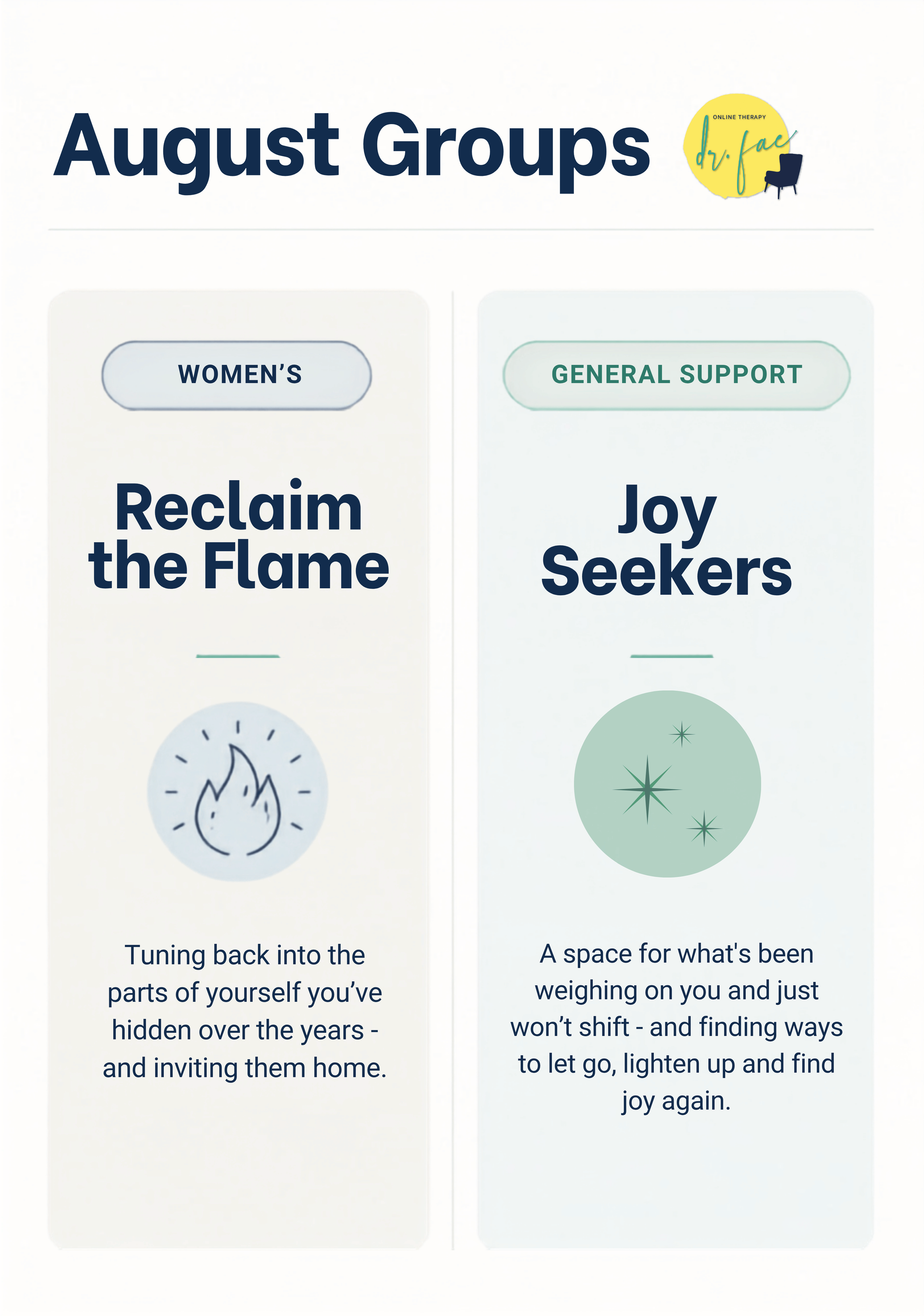
I've also included a few bonus resources below if you'd like to keep exploring Joy on your own.
Resources
How to create more whimsy in your life - I love these ideas. Helps us lighten up a bit and play. Pulls us out of the mundane.
Conversation starters that don't suck - I keep a couple of these on hand at parties in case the conversation loops back around to work or even if I just find whatever they are talking about to be boring
If you’re looking for a guide to help you along your path, here’s a guide on finding a guide.
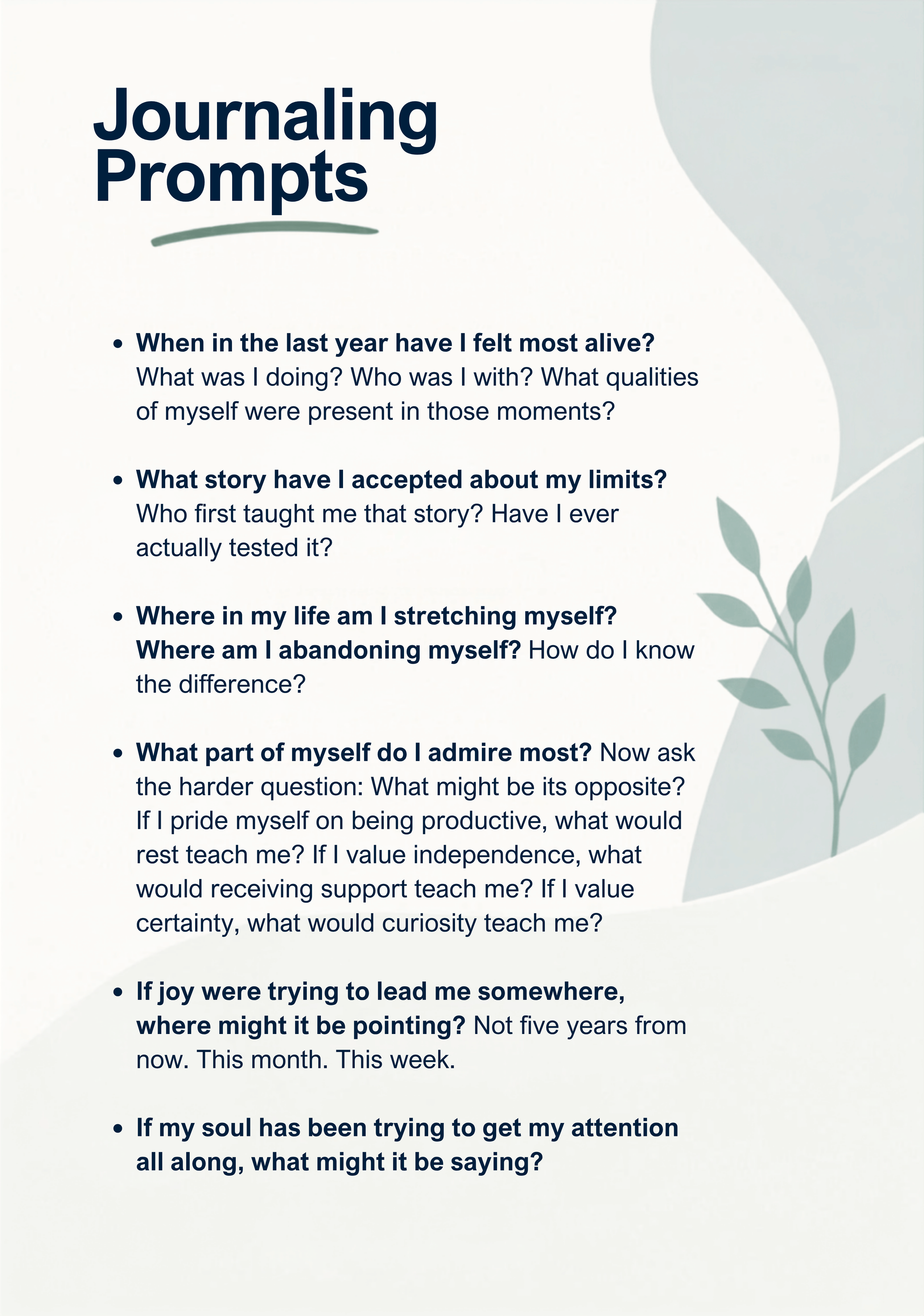
If you’re a journaling girlie, these are for you:
As always, thanks for joining me here. If I can ever be helpful with a resource or referral, please don’t hesitate to reach out.
Glad you're here,
fae

dr. fae
has a Ph.D. in Counseling Psychology. She lives abroad and offers online therapy & clinical supervision. In her individual therapy practice, she specializes in depth work, value alignment, existential questions, decision making, and general coping to increase overall life satisfaction.
*The content on online-therapy.net is not intended to be a substitute for professional medical/therapy advice, diagnosis, or treatment. Always seek the advice of your physician or other qualified health provider with any questions you may have regarding a medical/mental condition. Never disregard professional medical advice or delay in seeking it because of something you have read on this website.